Art & Neurodiversity


We believe art is for everybody. Art offers a colourful, flexible way to communicate, process feelings, explore ideas and enjoy making something personal. For neurodivergent people, creative activities can provide an especially welcoming space: one without a single “right” answer. Whether we are drawing, colouring, photographing, crafting or making a collage, art can help us share what matters to us in our own way.
 

Creativity Comes in Many Forms

Every brain takes in, sorts and expresses information differently. Some of us think best in pictures, patterns, movement, sound or stories rather than long stretches of written language. This is why creativity and neurodiversity fit so naturally together. Art does not require formal training, expensive equipment or perfect results. A pencil, a few colours, found objects or a tablet can all become creative tools. Most importantly, art is about communication, curiosity and enjoyment,not getting everything “right”.


Understanding Neurodiversity

Neurodiversity is the idea that differences in the way brains work are a natural part of human variety. “Neurodivergent” is an umbrella term often used by people whose brains process information differently from what is considered typical, while “neurotypical” refers to people whose development and thinking broadly follow expected patterns.

Neurodiversity is not something that needs to be “fixed”. People may experience real challenges and need appropriate support, but they also have strengths, interests and valuable perspectives.

 ​​


Different types of neurodivergence

  • Dyslexia

    Can affect reading, spelling and written processing, while often sitting alongside strong visual or creative thinking.

  • ADHD

    Can involve differences in attention, energy, organisation and impulse control.

  • Autism

    Can affect communication, sensory processing and social interaction, while also bringing focused interests and distinctive ways of seeing the world.

  • Dyspraxia

    May affect coordination, planning and motor skills.

  • Dyscalculia

    Relates to difficulty processing numbers and mathematical concepts.

  • Tourette Syndrome

    Involves tics, which are involuntary movements or sounds.


Why Art Supports Neurodivergent Minds

Art and neurodiversity connect in many useful and joyful ways. Creative work can be adapted to suit individual preferences, sensory needs, interests and abilities. It may be done alone, with family, at school, in a group or simply in a quiet corner at home.

poetry in

Visual Thinking

Many neurodivergent people naturally think through images rather than words alone. Pictures, shapes, colours, symbols and patterns can make an idea easier to understand or remember.

Art can offer ways to:

  • Turn a feeling into colour or texture
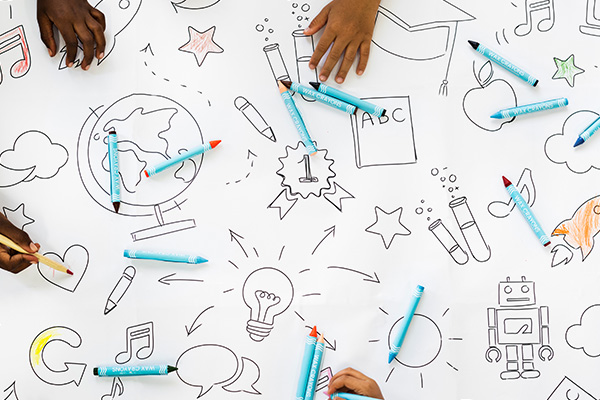
  • Map out an idea with pictures and arrows
  • Create characters, scenes or imaginary worlds
  • Show a story without having to write every detail
  • Explore patterns, collections and favourite subjects

For children who enjoy poems for children, an illustration can also provide a friendly doorway into language and storytelling.

Creative Freedom

Schoolwork and everyday tasks can sometimes feel full of rules, time limits and worries about mistakes. Art is different. There is often no single correct answer, and that freedom can reduce pressure.

We can experiment with materials, change our minds, start again, make happy accidents and develop a style that feels like our own. For neurodiverse children and art can be a particularly positive combination when adults focus on the process,exploring and enjoying,rather than judging the finished result.


poetry in

Non-Verbal Communication

Words are not always the easiest way to explain an experience. Art can help people communicate feelings, memories, worries, hopes, ideas and identity without needing to speak or write a great deal.

A drawing might show a busy classroom, a favourite animal, an exciting imagined journey or a difficult day. There does not need to be a hidden meaning in every picture; simply making it can be valuable.


poetry in

Problem Solving

Creating artwork involves many small decisions. We choose colours, arrange shapes, test tools, respond when something changes and find new ways forward.

This can encourage:

  • Planning and sequencing
  • Flexible thinking
  • Experimentation
  • Decision making
  • Innovation and imaginative problem solving


How Art Can Support Wellbeing

Creative activities for neurodivergent children can support wellbeing, although they are not a replacement for professional healthcare or specialist support where this is needed. The greatest benefits often come when activities are enjoyable, accessible and free from unnecessary pressure.

 ​

Emotional Expression

Art can offer a safe outlet for many feelings, including stress, anxiety, happiness, frustration, confidence and grief. A child may find it easier to paint an angry storm, make a cheerful collage or draw a calm place than to explain those feelings directly.

We can invite expression with gentle questions such as, “Would you like to tell us about your picture?” It is equally fine if the artist prefers not to explain. Their artwork belongs to them.


Improved Focus

Some creative activities encourage concentration and a sense of calm attention. When we become absorbed in drawing, building, colouring or creating a repeated pattern, we may experience a “flow” state: being fully involved in the task in front of us.

Helpful activities might include:

  • Detailed colouring pages
  • Drawing favourite characters or animals
  • Beadwork, weaving or simple textile crafts
  • Clay modelling
  • Repeated patterns, zentangles or printmaking
  • Digital illustration and animation

Short sessions can be just as worthwhile as long ones. A five-minute sketch is still creative work.

Confidence Building

Art gives us a visible record of effort and progress. Learning to use a new tool, completing a picture or sharing a piece of work can build confidence over time.

Encouragement works best when it is specific. Instead of saying only “That is lovely”, we might say, “We noticed the careful pattern you created,” or “Those colours make the picture feel energetic.” This values choices and effort rather than comparing one person's work with another's.

Reducing Anxiety

Repetitive, predictable activities such as drawing, colouring, painting or crafting may help some people feel more settled. Familiar materials, a comfortable workspace and the option to stop at any time can make art activities for children feel safe and manageable.

Sensory preferences matter. Some people love finger paint and textured collage; others may dislike sticky materials, strong smells or noisy spaces. We can offer alternatives, such as pencils instead of paint, or digital art instead of messy materials.


Art Across Different Neurodivergent Conditions

Dyslexia

Many people with dyslexia are strong visual thinkers with imaginative, big-picture ideas. Art can support storytelling through images, design, maps, diagrams and character creation. Poetry and art for children can work beautifully together, allowing a poem's mood or meaning to be explored visually.

Autism

Autistic people may have strong attention to detail, pattern recognition, precision and deeply held interests. Art can be a fulfilling way to explore favourite subjects, collections, systems, characters or sensory experiences. Clear choices and predictable routines can help make creative sessions more comfortable.

ADHD

Art can provide an outlet for high energy, quick idea generation and creative exploration. Some people with ADHD enjoy moving between materials or working in short bursts, while others experience satisfying hyperfocus on a project they love. Flexible, low-pressure sessions are often useful.

Dyspraxia

Dyspraxia can affect coordination and fine motor planning, but it does not limit imagination. Adapted tools, larger brushes, thicker pencils, scissors with support handles or digital art can make creativity more accessible. The process matters much more than neatness or perfection.


Routes into creativity

We celebrate many routes into creativity:

  • Drawing

  • Painting

  • Digital Art

  • Sculpture

  • Printmaking

  • Photography

  • Collage

  • Mixed Media

  • Textile Art

  • Pottery

  • Crafts

  • Illustration

  • Comic Art

  • Nature Art


Art as a Safe Space

Art can be a space for exploration without fear of getting an answer wrong. It invites us to be curious,
to test ideas and to accept imperfections as part of making.


Experimentation

Trying unfamiliar materials or approaches.
 

Curiosity

Following a question, interest or favourite theme.


Exploration

Noticing what colours, textures and images feel meaningful.

Acceptance

Recognising that mistakes can become part of the artwork.


Explore Our Poems and Pictures

Ready for a creative adventure?

Explore the animal poems at Pen and Brush, where original poetry, illustrations and playful ideas come together. We can read poems online, enjoy accompanying artwork and use each poem as a starting point for our own drawing, colouring, storytelling or nature-based art activity.

Visit our Animal Poems collection to meet curious creatures, discover new words and find inspiration for poetry and art activities for children.


Read it. Hear it. See it. Learn from it.

Explore Our Poems 

Poetry, Dyslexia & Neurodiversity 


Art &
Neurodiversity 

Performing Arts & Neurodiversity